S.
i
Index
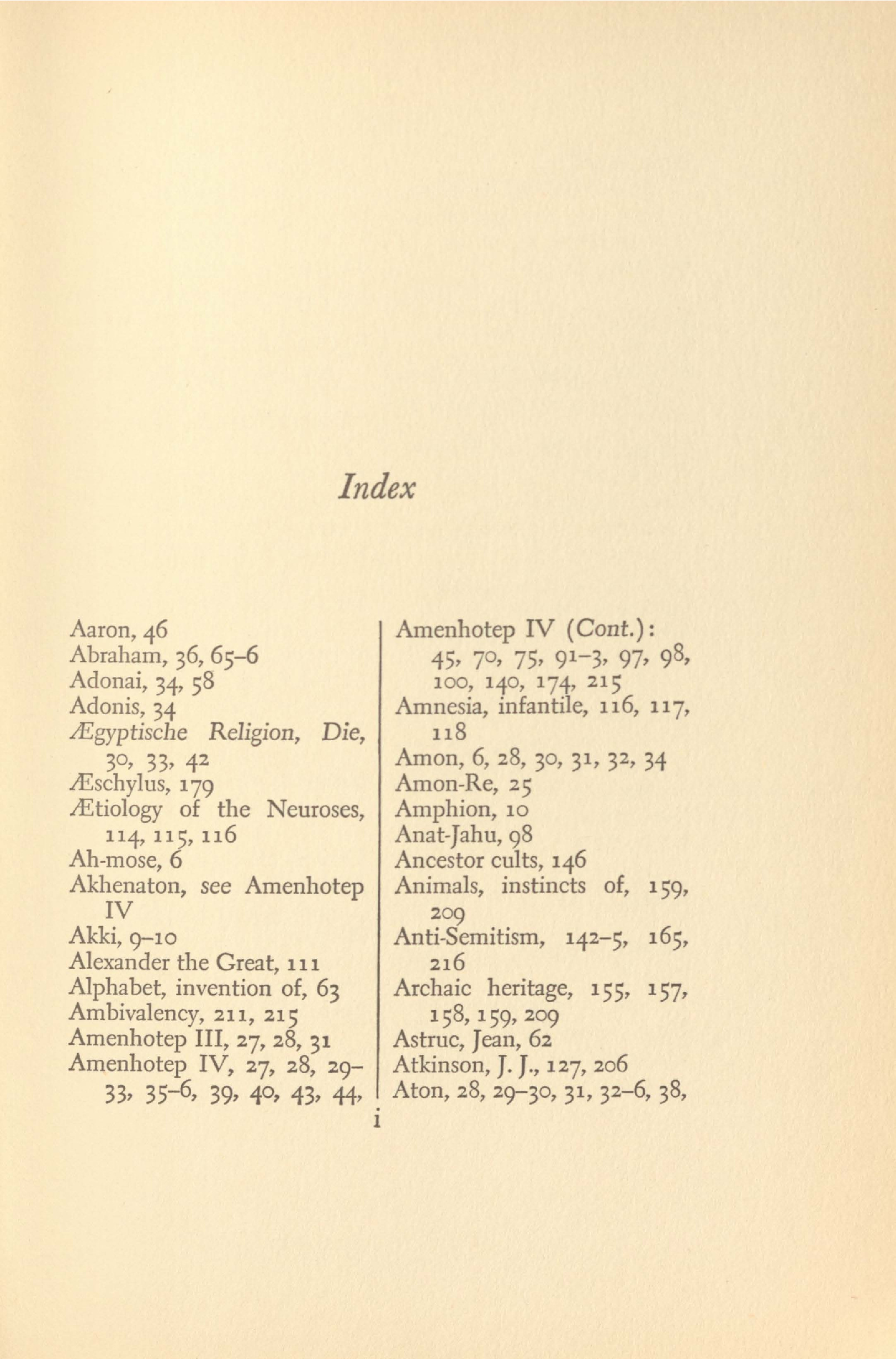
Aaron, 46
Abraham, 36, 65–6
Adonai, 34, 58
Adonis, 34
Ægyptische Religion, Die,
30, 33, 42Æschylus, 179
Ætiology of the Neuroses,
114, 115, 116Ah-mose, 6
Akhenaton, see Amenhotep
IVAkki, 9–10
Alexander the Great, 111
Alphabet, invention of, 63
Ambivalency, 211, 215
Amenhotep III, 27, 28, 31
Amenhotep IV, 27, 28, 29–
33, 35–6, 39, 40, 43, 44,Amenhotep IV (Cont.):
45, 70, 75, 91–3, 97, 98,
100, 140, 174, 215Amnesia, infantile, 116, 117,
118Amon, 6, 28, 30, 31, 32, 34
Amon-Re, 25
Amphion, 10
Anat-Jahu, 98
Ancestor cults, 146
Animals, instincts of, 159,
209Anti-Semitism, 142–5, 165,
216Archaic heritage, 155, 157,
158, 159, 209Astruc, Jean, 62
Atkinson, J. J., 127, 206
Aton, 28, 29–30, 31, 32–6, 38,
S.
ii
INDEX
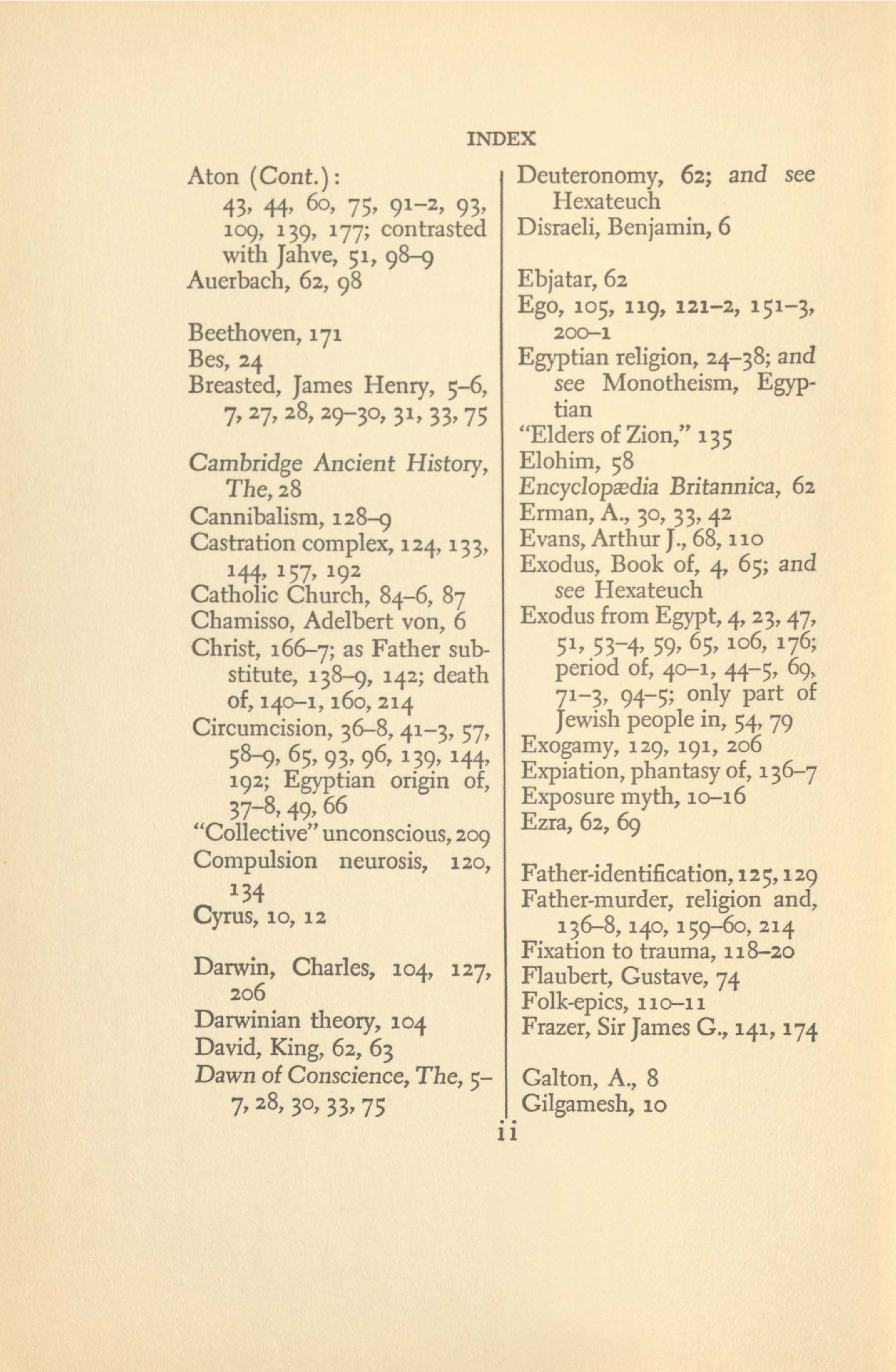
Aton (Cont.):
43, 44, 60, 75, 91–2, 93,
109, 139, 177; contrasted
with Jahve, 51, 98–9
Auerbach, 62, 98Beethoven, 171
Bes, 24
Breasted, James Henry, 5–6,
7, 27, 28, 29–30, 31, 33, 75Cambridge Ancient History,
The, 28
Cannibalism, 128–9
Castration complex, 124, 133,
144, 157, 192
Catholic Church, 84–6, 87
Chamisso, Adelbert von, 6
Christ, 166–7; as Father sub-
stitute, 138–9, 142; death
of, 140–1, 160, 214
Circumcision, 36–8, 41–3, 57,
58–9, 65, 93, 96, 139, 144,
192; Egyptian origin of,
37–8, 49, 66
“Collective” unconscious, 209
Compulsion neurosis, 120,
134
Cyrus, 10, 12Darwin, Charles, 104, 127,
206
Darwinian theory, 104
David, King, 62, 63
Dawn of Conscience, The, 5–
7, 28, 30, 33, 75Deuteronomy, 62; and see
Hexateuch
Disraeli, Benjamin, 6Ebjatar, 62
Ego, 105, 119, 121–2, 151–3,
200–1
Egyptian religion, 24–38; and
see Monotheism, Egyp-
tian
“Elders of Zion,” 135
Elohim, 58
Encyclopædia Britannica, 62
Erman, A., 30, 33, 42
Evans, Arthur J., 68, 110
Exodus, Book of, 4, 65; and
see Hexateuch
Exodus from Egypt, 4, 23, 47,
51, 53–4, 59, 65, 106, 176;
period of, 40–1, 44–5, 69,
71–3, 94–5; only part of
Jewish people in, 54, 79
Exogamy, 129, 191, 206
Expiation, phantasy of, 136–7
Exposure myth, 10–16
Ezra, 62, 69Father-identification, 125, 129
Father-murder, religion and,
136–8, 140, 159–60, 214
Fixation to trauma, 118–20
Flaubert, Gustave, 74
Folk-epics, 110–11
Frazer, Sir James G., 141, 174Galton, A., 8
Gilgamesh, 10S.
iii
INDEX
Gods of Greece, The, 160
Goethe, 141, 171, 194, 198,
200
Golden Bough, The, 141, 174
Greatness, qualities of, 170–3
Gressmann, Hugo, 52, 58
Guilt: feelings of, in Jews, 99,
136, 212, 213–15; tragic,
of hero, 138Haremhab, 32, 40, 72, 92
Heine, Heinrich, 42
Heracles, 10
Herod, King, 14
Herodotus, 37, 42, 49, 63
Heroes, myths of birth of, 8–
16, 168
Hexateuch, origin of, 58, 59,
62–4
History of Egypt, The
(Breasted), 5, 28, 29–30,
31
Hoffmann, E. T. A., 199
Homer, 110, 111
Horus, 42
Hosea, 52Id, 152–4, 159
Ikhnaton, see Amenhotep IV
Images, making of, 24, 25, 33,
35, 63, 177–8, 181, 187
Imago, 83, 163
Incest, 190–1
Isaac, 65–6
Isis, 42
Israel in der Wüste, 141Israeliten und ihre Nachbar-
stamme, Die, 47, 48, 49,
50–1Jacob, 37, 65–6
Jahu, 98
Jahve, 29, 74, 96, 102; a vol-
cano-god, 48, 51, 59, 67–8;
use of name of, 24, 58, 66,
178; contrasted with Aton,
51, 98–9; “chooses” a
people, 67, 99; and mono-
theism, 74, 97; displaces
Mosaic god, 75–6, 94; be-
comes identical with old
Mosaic god, 75–6, 99–
100, 109, 112, 175, 196;
character of, 97, 98; con-
trasted with Allah, 146;
and see Qadeš
Jesus, 14; and see Christ
Jethro, 49, 60
Jews: as “chosen” people, 67,
99, 176, 177, 194, 212;
character of, 165–8, 187,
194–6, 216; spiritual de-
velopment of, 181–2; and
see Anti-Semitism
Jochanan ben Sakkai, 181
Jones, Ernest, 138
Joseph, 166
Josephus, Flavius, 13, 40, 45
Joshua, Book of, 62, 66; and
see Hexateuch
Jüdisches Lexicon, 4–5Karna, 10
S.
iv
INDEX
Latency period, 106, 117, 118,
120–6; and Jewish mono
theism, 106, 108–9, 113,
135Lays of Ancient Rome, 112
Leonardo da Vinci, 171
Levites, 12, 55–8, 73, 76, 96
Life and Times of Akhenaton,
The, 32, 33, 35Maat, 24, 28, 75, 76, 92
Macaulay, Thomas B., 112
Matriarchy, 129–30, 131, 132,
206–7, 208Manetho, 166
Mass psychology, 104, 109,
113, 145, 147, 159, 200,
208Memory traces, unconscious,
147, 149, 154, 157, 158,
159–60Meribat-Qadeš, see Qadeš
Merneptah, 40; stele of, 72,
73, 94–5Messiah, wish-phantasy of,
141–2Meyer, Eduard, 13, 16, 47, 48,
49, 50, 52, 54, 72, 94Minos, King of Crete, 68, 110
Mithra, 138
Mohammedanism, 146
Monotheism: Mosaic, 24–6,
75, 77, 101–3, 106, 139;
death and, 26, 33, 36;
Egyptian, 27–33, 44, 75,
91–3, 100, 101, 134–5,
139, 174; Jewish, 35, 44,Monotheism (Cont.):
101, 103, 134–5, 140, 145,
174–5, 213; Jahve and, 74,
97; genesis of, 100–1, 103,
170; Christian, 134, 139,
145, 215Mosaic religion, 23–7, 33, 175,
195–6; contrasted with
Egyptian, 24–7, 34–9; re-
linquishes sun-worship, 35;
and circumcision, 36, 38,
66, and see Circumcision;
original, fused with that of
Jahve, 69, and see Qadeš.
See also Monotheism,
JewishMose und seine Zeit, 58
Moses: his period, 3–4, 39, 40,
44, 95; his name, 4–7, 93;
an Egyptian, 6–7, 14, 15-
17, 21–4, 38–40, 47, 49;
and typical hero myth, 11-
16, 40, 51; extra-Biblical
myths about, 45–6; his im-
patience, 46, 60; his “slow-
ness of speech,” 46–7; his
relation to Qadeš, 49, 50,
51, 59–61, 65, 71–2; his
murder, 52–4, 70–2, 73,
94, 140–2, 146, 148, 160,
173–4; and Levites, 56;
duality of, 60, 79; hy-
potheses concerning, sum-
marized, 93–9; creator of
the Jews, 167–8, 173; iden-
tification with the father,S.
v
INDEX
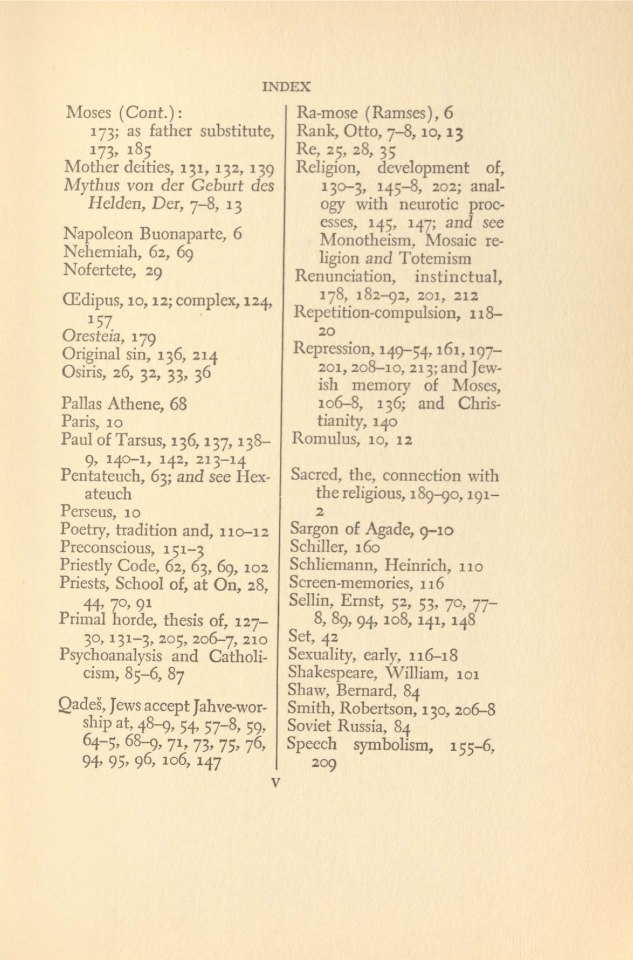
Moses (Cont.):
173; as father substitute,
173, 185Mother deities, 131, 132, 139
Mythos von der Geburt des
Helden, Der, 7–8, 13Napoleon Buonaparte, 6
Nehemiah, 62, 69
Nofertete, 29
Œdipus, 10, 12; complex, 124,
157Oresteia, 179
Original sin, 136, 214
Osiris, 26, 32, 33, 36
Pallas Athene, 68
Paris, 10
Paul of Tarsus, 136, 137, 138–
9, 140–1, 142, 213–14Pentateuch, 63; and see Hex-
ateuchPerseus, 10
Poetry, tradition and, 110–12
Preconscious, 151–3
Priestly Code, 62, 63, 69, 102
Priests, School of, at On, 28,
44, 70, 91Primal horde, thesis of, 127–
30, 131–3, 205, 206–7, 210Psychoanalysis and Catholi-
cism, 85–6, 87Qadeš, Jews accept Jahve-wor-
ship at, 48–9, 54, 57–8, 59,
64–5, 68–9, 71, 73, 75, 76,
94, 95, 96, 106, 147Ra-mose (Ramses), 6
Rank, Otto, 7–8, 10, 13
Re, 25, 28, 35
Religion, development of,
130–3, 145–8, 202; anal-
ogy with neurotic proc-
esses, 145, 147; and see
Monotheism, Mosaic re-
ligion and TotemismRenunciation, instinctual,
178, 182–92, 201, 212Repetition-compulsion, 118–
20Repression, 149–54, 161, 197-
201, 208–10, 213; and Jew-
ish memory of Moses,
106–8, 136; and Chris-
tianity, 140Romulus, 10, 12
Sacred, the, connection with
the religious, 189–90, 191–
2Sargon of Agade, 9–10
Schiller, 160
Schliemann, Heinrich, 110
Screen-memories, 116
Sellin, Ernst, 52, 53, 70, 77–
8, 89, 94, 108, 141, 148Set, 42
Sexuality, early, 116–18
Shakespeare, William, 101
Shaw, Bernard, 84
Smith, Robertson, 130, 206–8
Soviet Russia, 84
Speech symbolism, 155–6,
209S.
INDEX
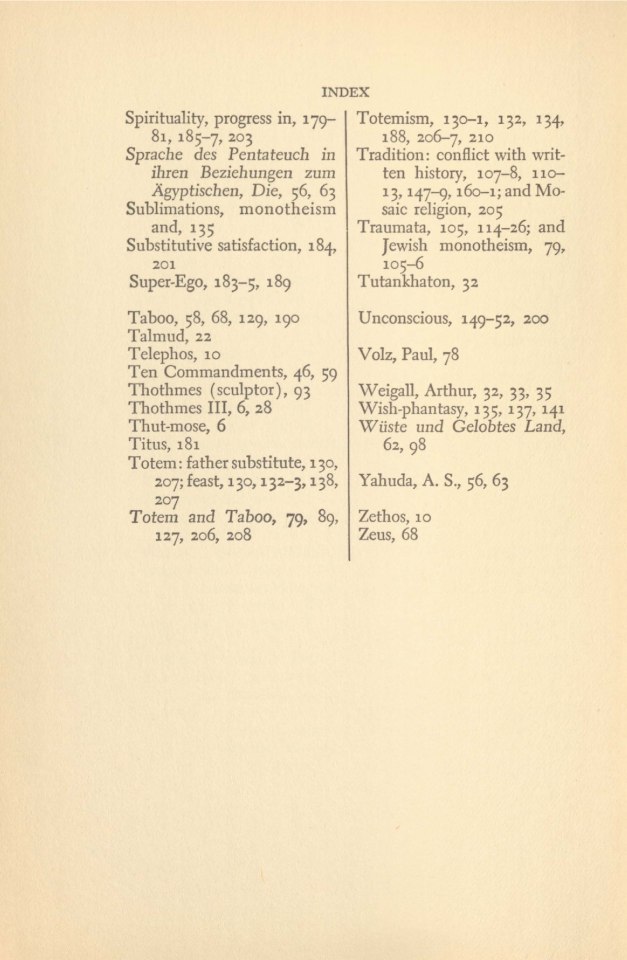
Spirituality, progress in, 179–
81, 185–7, 203Sprache des Pentateuch in
ihren Beziehungen zum
Ägyptischen, Die, 56, 63Sublimations, monotheism
and, 135Substitutive satisfaction, 184,
201Super-Ego, 183–5, 189
Taboo, 58, 68, 129, 190
Talmud, 22
Telephos, 10
Ten Commandments, 46, 59
Thothmes (sculptor), 93
Thothmes III, 6, 28
Thut-mose, 6
Titus, 181
Totem: father substitute, 130,
207; feast, 130, 132–3, 138,
207Totem and Taboo, 79, 89,
127, 206, 208Totemism, 130–1, 132, 134,
188, 206–7, 210Tradition: conflict with writ-
ten history, 107–8, 110–
13, 147–9, 160–1; and Mo-
saic religion, 205Traumata, 105, 114–26; and
Jewish monotheism, 79,
105–6Tutankhaton, 32
Unconscious, 149–52, 200
Volz, Paul, 78
Weigall, Arthur, 32, 33, 35
Wish-phantasy, 135, 137, 141
Wüste und Gelobtes Land,
62, 98Yahuda, A. S., 56, 63
Zethos, 10
Zeus, 68
S.

Moses and Monotheism1939-001/1939.2.en

1939-001/1939.2.en/G2
