S.
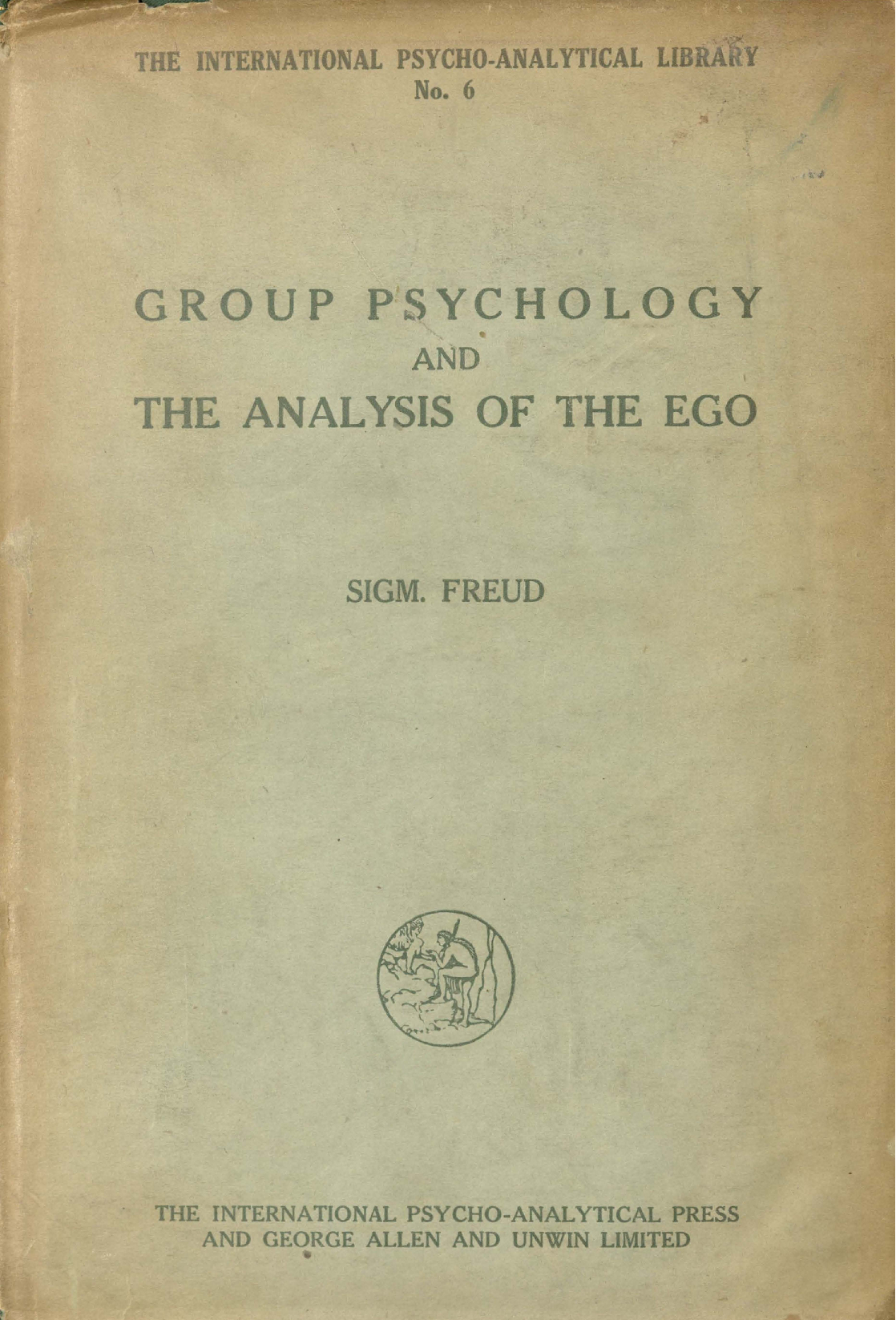
THE INTERNATIONAL PSYCHO-ANALYTICAL LIBRARY
No. 6GROUP PSYCHOLOGY
AND
THE ANALYSIS OF THE EGOSIGM. FREUD
THE INTERNATIONAL PSYCHO-ANALYTICAL PRESS
AND GEORGE ALLEN AND UNWIN LIMITEDS.
S.

S.
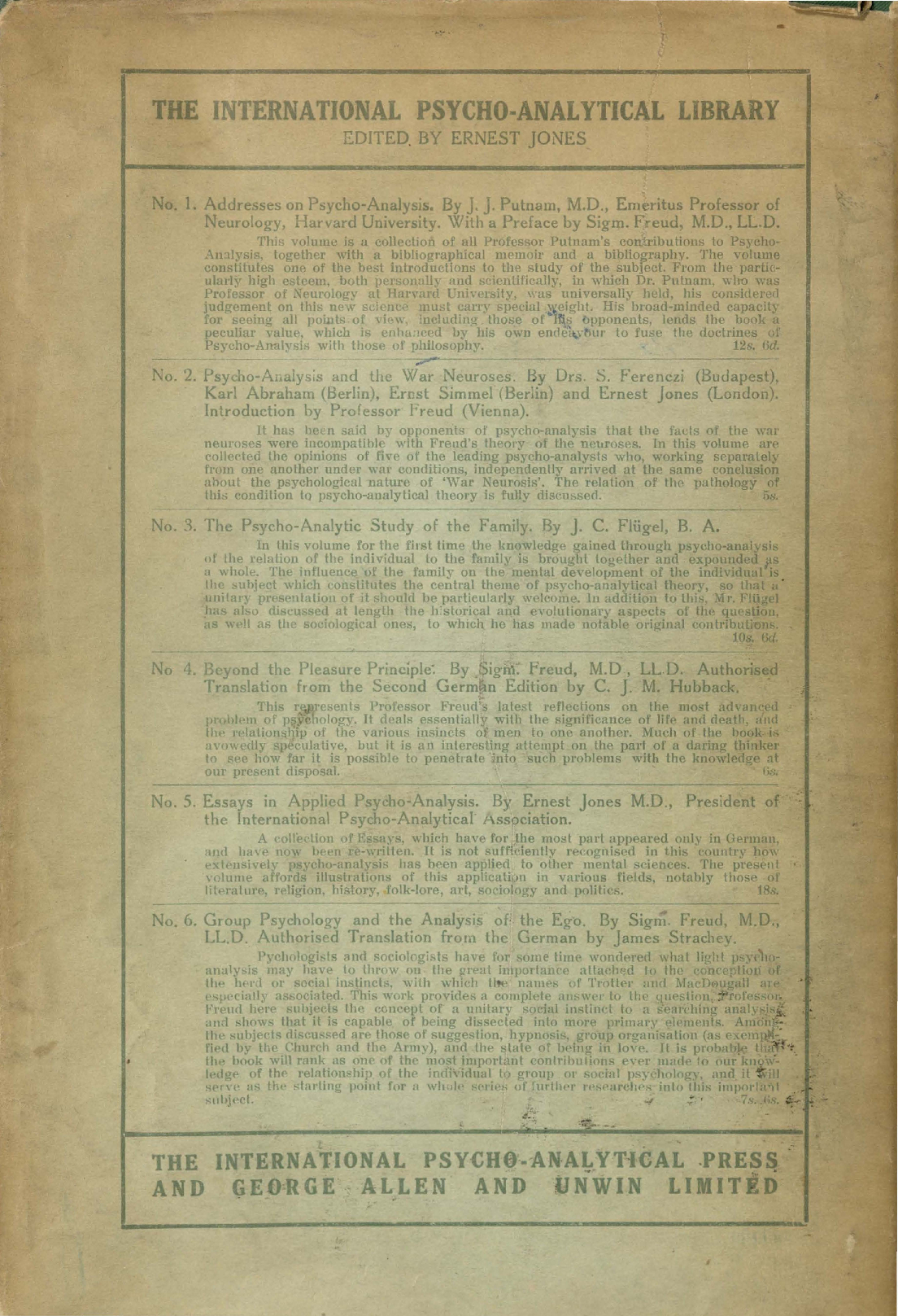
THE INTERNATIONAL PSYCHO-ANALYTICAL LIBRARY
EDITED. BY ERNEST JONES
No. 1. Addresses on Psycho-Analysis. By J. J. Putnam, M.D., Emeritus Professor of
Neurology, Harvard University. With a Preface by Sigm. Freud, M.D., LL.D.This volume is a collection of all Professor Putnam’s contributions to Psycho-
Analysis, together with a bibliographical memoir and a bibliography. The volume
constitutes one of the best introductions to the study of the subject. From the partic-
ularly high esteem, both personally and scientifically, in which Dr. Putnam, who was
Professor of Neurology at Harvard University, was universally held, his considered
judgement on this new science must carry special weight. His broad-minded capacity
for seeing all points of view, including those of his opponents, lends the book a
peculiar value, which is enhanced by his own endeavour to fuse the doctrines of
Psycho-Analysis with those of philosophy.
12s. 6d.
No. 2. Psycho-Analysis and the War Neuroses. By Drs. S. Ferenczi (Budapest),
Karl Abraham (Berlin), Ernst Simmel (Berlin) and Ernest Jones (London).
Introduction by Professor Freud (Vienna).It has been said by opponents of psycho-analysis that the facts of the war
neuroses were incompatible with Freud’s theory of the neuroses. In this volume are
collected the opinions of five of the leading psycho-analysts who, working separately
from one another under war conditions, independently arrived at the same conclusion
about the psychological nature of ‘War Neurosis’. The relation of the pathology of
this condition to psycho-analytical theory is fully discussed.
5s.
No. 3. The Psycho-Analytic Study of the Family. By J. C. Flügel, B. A.
In this volume for the first time the knowledge gained through psycho-analysis
of the relation of the individual to the family is brought together and expounded as
a whole. The influence of the family on the mental development of the individual is
the subject which constitutes the central theme of psycho-analytical theory, so that a
unitary presentation of it should be particularly welcome. In addition to this, Mr. Flügel
has also discussed at length the historical and evolutionary aspects of the question,
as well as the sociological ones, to which he has made notable original contributions.
10s. 6d.
No. 4. Beyond the Pleasure Principle. By Sigm. Freud, M.D., LL.D. Authorised
Translation from the Second German Edition by C. J. M. Hubback.This represents Professor Freud’s latest reflections on the most advanced
problem of psychology. It deals essentially with the significance of life and death, and
the relationship of the various instincts of men to one another. Much of the book is
avowedly speculative, but it is an interesting attempt on the part of a daring thinker
to see how far it is possible to penetrate into such problems with the knowledge at
our present disposal.
6s.
No. 5. Essays in Applied Psycho-Analysis. By Ernest Jones M.D., President of
the International Psycho-Analytical Association.A collection of Essays, which have for the most part appeared only in German,
and have now been re-written. It is not sufficiently recognised in this country how
extensively psycho-analysis has been applied to other mental sciences. The present
volume affords illustrations of this application in various fields, notably those of
literature, religion, history, folk-lore, art, sociology and politics.
18s.
No. 6. Group Psychology and the Analysis of the Ego. By Sigm. Freud, M.D.,
LL.D. Authorised Translation from the German by James Strachey.Psychologists and sociologists have for some time wondered what light psycho-
analysis may have to throw on the great importance attached to the conception of
the herd or social instincts, with which the names of Trotter and MacDougall are
especially associated. This work provides a complete answer to the question. Professor
Freud here subjects the concept of a unitary social instinct to a searching analysis,
and shows that it is capable of being dissected into more primary elements. Among
the subjects discussed are those of suggestion, hypnosis, group organisation (as exempli-
fied by the Church and the Army), and the state of being in love. It is probable that
the book will rank as one of the most important contributions ever made to our know-
ledge of the relationship of the individual to group or social psychology, and it will
serve as the starting point for a whole series of further researches into this important
subject.
7s. 6d.
THE INTERNATIONAL PSYCHO-ANALYTICAL PRESS
AND GEORGE ALLEN AND UNWIN LIMITED
S.
THE INTERNATIONAL PSYCHO-ANALYTICAL LIBRARY
EDITED BY ERNEST JONES
No. 1. Addresses on Psycho-Analysis. By J. J. Putnam, M.D., Emeritus Professor of
Neurology, Harvard University. With a Preface by Sigm. Freud, M.D., LL.D.This volume is a collection of all Professor Putnam's contributions to Psycho-
Analysis, together with a bibliographical memoir and a bibliography. The volume
constitutes one of the best introductions to the study of the subject. From the partic-
ularly high esteem, both personally and scientifically, in which Dr. Putnam, who was
Professor of Neurology at Harvard University, was universally held, his considered
judgement on this new science must carry special weight. His broad-minded capacity
for seeing all points of view, including those of his opponents, lends the book a
peculiar value, which is enhanced by his own endeavour to fuse the doctrines of
Psycho-Analysis with those of philosophy.
12s. 6d.No. 2. Psycho-Analysis and the War Neuroses. By Drs. S. Ferenczi (Budapest),
Karl Abraham (Berlin), Ernst Simmel (Berlin) and Ernest Jones (London).
Introduction by Professor Freud (Vienna).It has been said by opponents of psycho-analysis that the facts of the war
neuroses were incompatible with Freud's theory of the neuroses. In this volume are
collected the opinions of five of the leading psycho-analysts who, working separately
from one another under war conditions, independently arrived at the same conclusion
about the psychological nature of 'War Neurosis'. The relation of the pathology of
this condition to psycho-analytical theory is fully discussed.
5s.No. 3. The Psycho-Analytic Study of the Family. By J. C. Flügel, B. A.
In this volume for the first time the knowledge gained through psycho-analysis
of the relation of the individual to the family is brought together and expounded as
a whole. The influence of the family on the mental development of the individual is
the subject which constitutes the central theme of psycho-analytical theory, so that a
unitary presentation of it should be particularly welcome. In addition to this, Mr. Flügel
has also discussed at length the historical and evolutionary aspects of the question,
as well as the sociological ones, to which he has made notable original contributions.
10s. 6d.No. 4. Beyond the Pleasure Principle. By Sigm. Freud, M.D., LL.D. Authorised
Translation from the Second German Edition by C. J. M. Hubback.This represents Professor Freud's latest reflections on the most advanced
problem of psychology. It deals essentially with the significance of life and death, and
the relationship of the various instincts of men to one another. Much of the book is
avowedly speculative, but it is an interesting attempt on the part of a daring thinker
to see how far it is possible to penetrate into such problems with the knowledge at
our present disposal.
6s.No. 5. Essays in Applied Psycho-Analysis. By Ernest Jones M.D., President of
the International Psycho-Analytical Association.A collection of Essays, which have for the most part appeared only in German,
and have now been re-written. It is not sufficiently recognised in this country how
extensively psycho-analysis has been applied to other mental sciences. The present
volume affords illustrations of this application in various fields, notably those of
literature, religion, history, folk-lore, art, sociology and politics.
18s.No. 6. Group Psychology and the Analysis of the Ego. By Sigm. Freud, M.D.,
LL.D. Authorised Translation from the German by James Strachey.Psychologists and sociologists have for some time wondered what light psycho-
analysis may have to throw on the great importance attached to the conception of
the herd or social instincts, with which the names of Trotter and MacDougall are
especially associated. This work provides a complete answer to the question. Professor
Freud here subjects the concept of a unitary social instinct to a searching analysis,
and shows that it is capable of being dissected into more primary elements. Among
the subjects discussed are those of suggestion, hypnosis, group organisation (as exempli-
fied by the Church and the Army), and the state of being in love. It is probable that
the book will rank as one of the most important contributions ever made to our know-
ledge of the relationship of the individual to group or social psychology, and it will
serve as the starting point for a whole series of further researches into this important
subject.
7s. 6d.THE INTERNATIONAL PSYCHO-ANALYTICAL PRESS
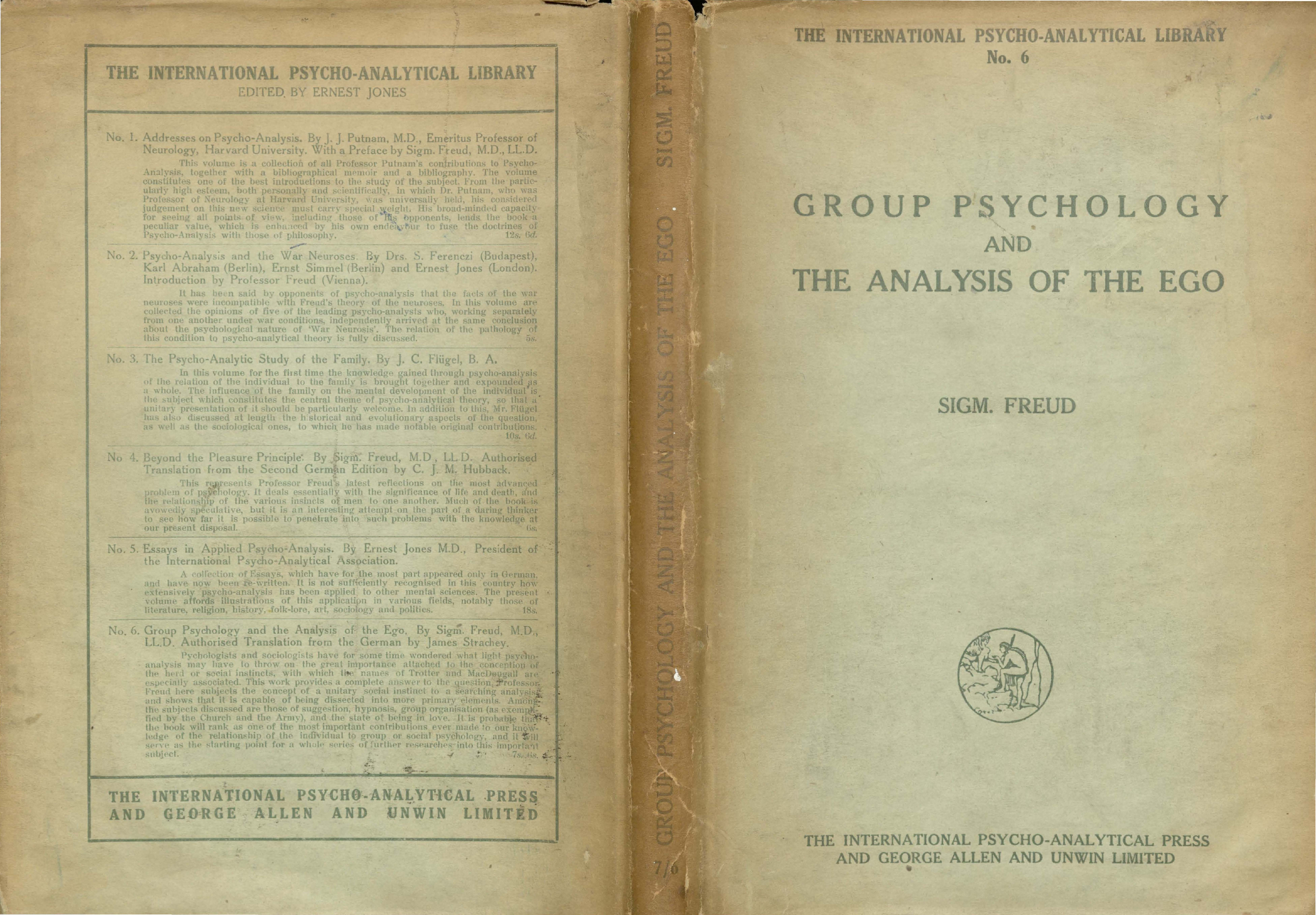
AND GEORGE ALLEN AND UNWIN LIMITEDSIGM. FREUD
GROUP PSYCHOLOGY AND THE ANALYSIS OF THE EGO
7/6
THE INTERNATIONAL PSYCHO-ANALYTICAL LIBRARY
No. 6GROUP PSYCHOLOGY
AND
THE ANALYSIS OF THE EGO
SIGM. FREUD
THE INTERNATIONAL PSYCHO-ANALYTICAL PRESS
AND GEORGE ALLEN AND UNWIN LIMITED
Group Psychology and the Analysis of the Ego1921-001/1922.en

1921-001/1922.en/S
